


 Men's
Men's  Tactical
  Women's
  Smart
Smart  Sport
Sport  Children
  Patriotic
  Straps
  Discounts
 Historical facts about watches you didn't know
.jpg) Historical
facts about watches you didn't know
Historical
facts about watches you didn't know
Mankind from the very
creation sought ways to measure time. How many interesting inventions were
invented, but not all of them "caught on", received universal
distribution. It is easy to guess that the latter include wristwatches.
Clock
of the ancient world
The first device to measure
time was a sundial. They were invented in Ancient Babylon more than 3 thousand
years ago. People, tracking the movement of the sun across the sky, found that
objects cast a shadow. And the length of the shadow was different in magnitude
depending on the time of day. The pole from which the shadow was cast is called
a gnomon. Of course, such watches worked only in Sunny weather and their
accuracy was, to put it mildly, small.
.jpg)
The next stage in the
development of watchmaking was the hourglass. Such models are found in the
modern world. Hourglass usually consists of two flasks with a narrow hole
between them. Sand is poured from one compartment to another and it takes some
time. Usually such hours were calculated for a period of time from a few
minutes to an hour. Great accuracy of this type of clock also could not boast,
because over time, the grains of sand were worn, crushed and poured out faster
than necessary. In the ancient world there were also water, oil and even fire
clocks, which were used in very individual cases.
Stages
of accelerated development of watchmaking skills
.jpg)
Era
of mechanics
Mechanical watches almost in
the form to which we are accustomed, appeared only in the 16th century.
Initially, they were stationary structures with a large body. Due to the
popularity gained, further improvement went the way of reducing the size while
increasing the accuracy of the stroke. Thus appeared the first wristwatch.
Few people know that
initially wrist chronometers were intended for women. They were first made by
the Breguet brand in the early 19th century and were not about practical
accessories measuring time, but rather about decoration. Men preferred pocket
watches on a chain. And so it continued until the 30s of the last century.
Men's wristwatches came into use with the outbreak of hostilities during the
First world war. A securely fastened chronometer on his hand was preferable to
the pocket version.
.jpg)
Watchmaking technology did
not stand still and developed further at an advanced pace. In 1926, Rolex created
the world's first dustproof and waterproof watch. The manufacturer was so
confident in its technology that it presented its product to a swimmer who
crossed the English channel for the first time. And they stood the test.
Nowadays it is difficult to imagine a modern chronometer without the support of
protection against moisture and dust in the watch case.
The
appearance of quartz movement
The next stage in the
development of the clock mechanism was the transition to the drive from the
compressed spring to the energy of the battery. Along with mechanical
accessories, quartz watches began to be produced. The accuracy of this clock is
quite large: the error of the course is from 5 to 15 seconds per month. But
another significant advantage of quartz watches over mechanics is the absence
of the need for everyday winding of the drive spring. The technology of
production development has reached such a level that at the moment the quartz
type of mechanism is relatively inexpensive in production and is available to
the mass consumer.
Electronic
and smart watches
Further development of
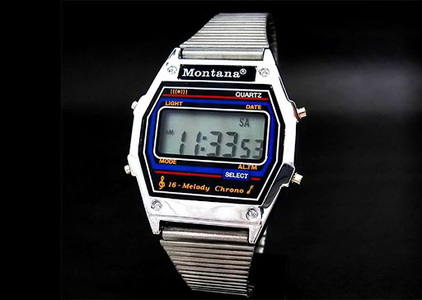
technology marked the emergence in the 70s of the 20th century of electronic
watches with LCD display and indication of numbers instead of the usual hands.
The pioneer in this market segment was the Swiss company BWC. Initially, the
technology was imperfect and very expensive, but further development led to the
emergence of full-fledged inexpensive LCD-displays. The Japanese company Seiko
took its niche and leadership positions, sharply increasing interest in
electronic watches in the late 80's and early 90's.
Do not forget about the
prototypes of modern smart watches or as they are now called Smart. The leaders
in this area were the Japanese. Companies Seiko and Casio in the late 70s of
the last century established the production of watches with a built-in
calculator, games and even a TV. They were simple games like Tetris, puzzles or
shooting games. But this laid the Foundation for the trend of smart watches and
played a significant role in the emergence of the familiar Apple Watch, Samsung
Galaxy Watch, Huawei Watch, etc.
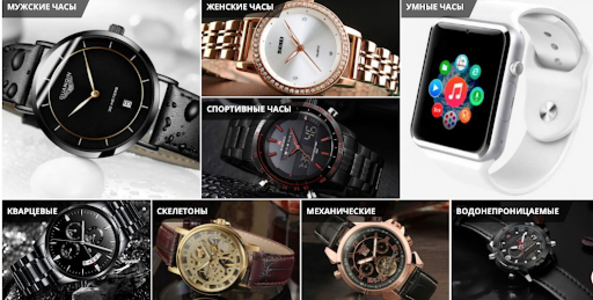
What came the development of
watchmaking can be seen in the catalog of the online store
"best-Time". It presents a huge variety of mechanical, quartz,
electronic and smart watches for men, women, children. This stylish modern
products, which will be a harmonious addition to the image of the modern man.
You can order a wristwatch
for yourself or for a gift by phone or through the website shopping cart.


' style='animation-play-state:running;animation-delay:0s'%3E%3CanimateTransform attributeName='transform' type='rotate' calcMode='linear' values='0 50 50;360 50 50' keyTimes='0;1' dur='1s' begin='0s' repeatCount='indefinite'/%3E%3C/circle%3E%3C/svg%3E)